Warbler
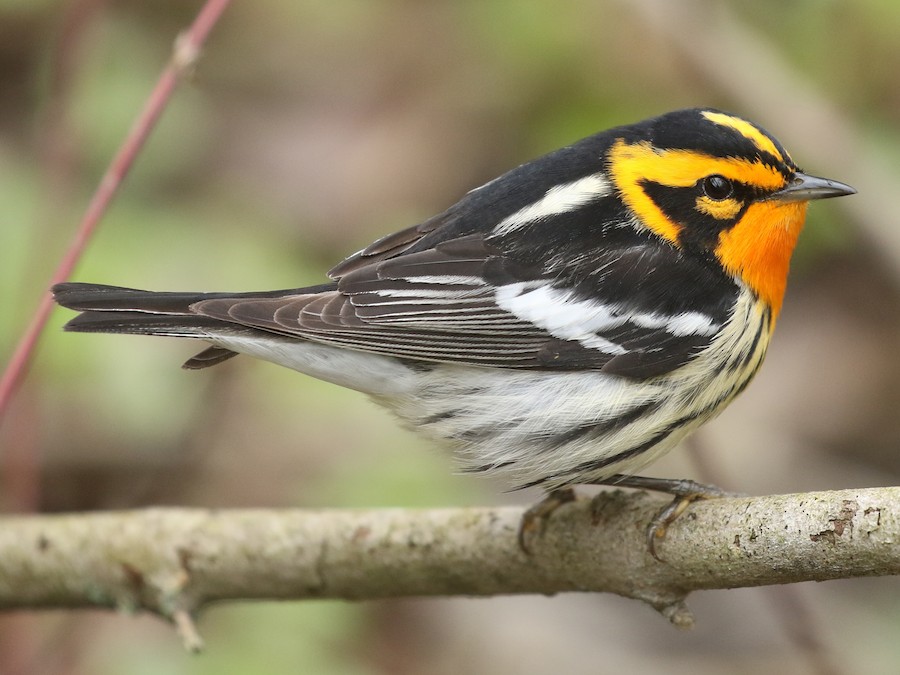
Welcome to Warbler Class!
This class page will share the fantastic learning we do in class.
Our class teacher is Mr Thomas.
We are supported by Mrs Cross, Mrs Ledsham and Ms Lawson.
Scroll down to see our amazing journey this year!
September–December 2026
PE
- Our PE Day is on Thursday and will be taught by Mr Franco.
Please make sure your child has the correct PE uniform on this day. It will be both outdoor and indoor PE.
Outdoor Learning and Playtimes
- Please make sure your child has a raincoat and wellies in school everyday so they can participate in outdoor learning and playtimes.
- As it is still sunny, please can children have with them a sun hat as well.
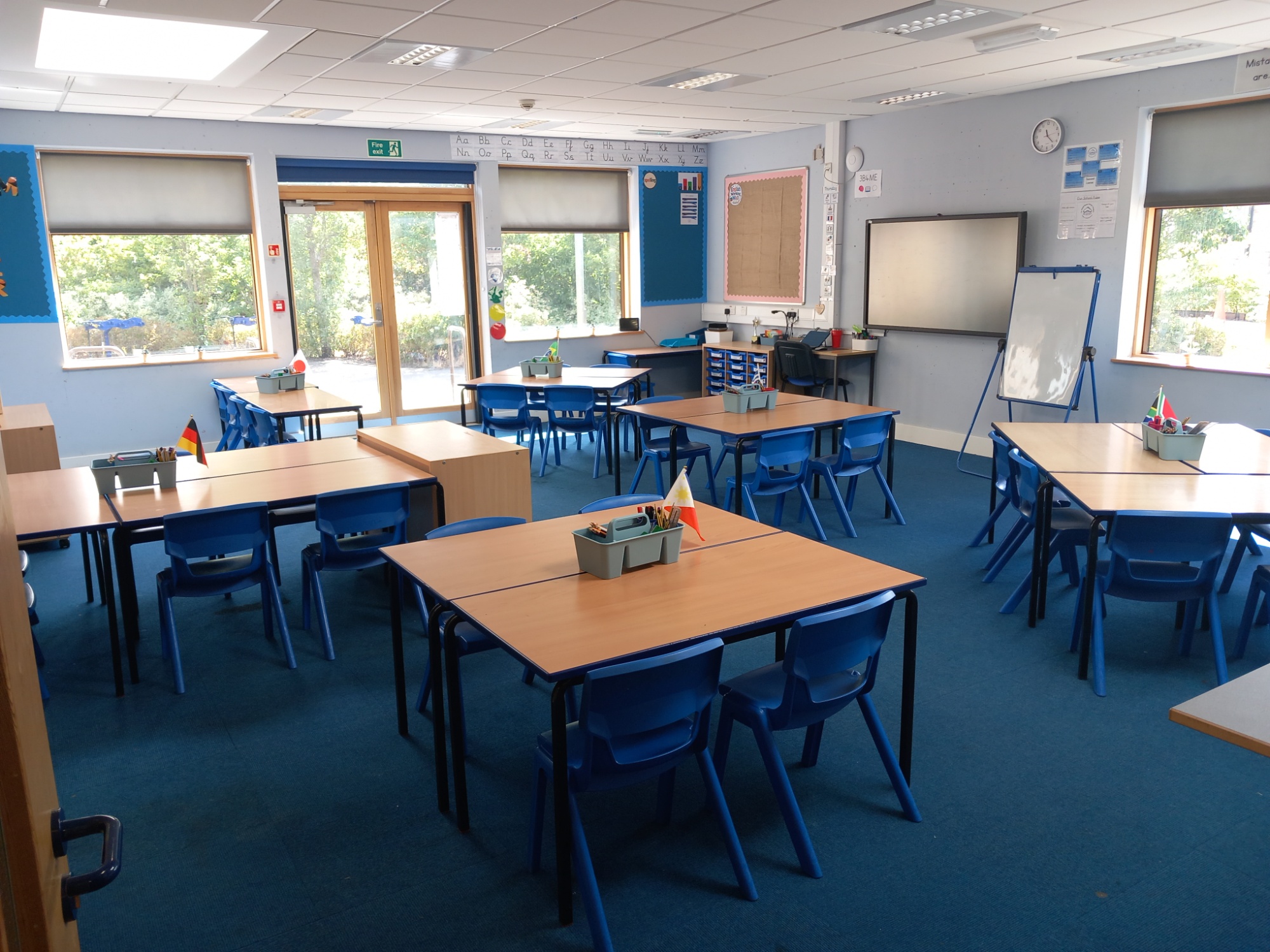
Layout of Classroom
Learning Timetable
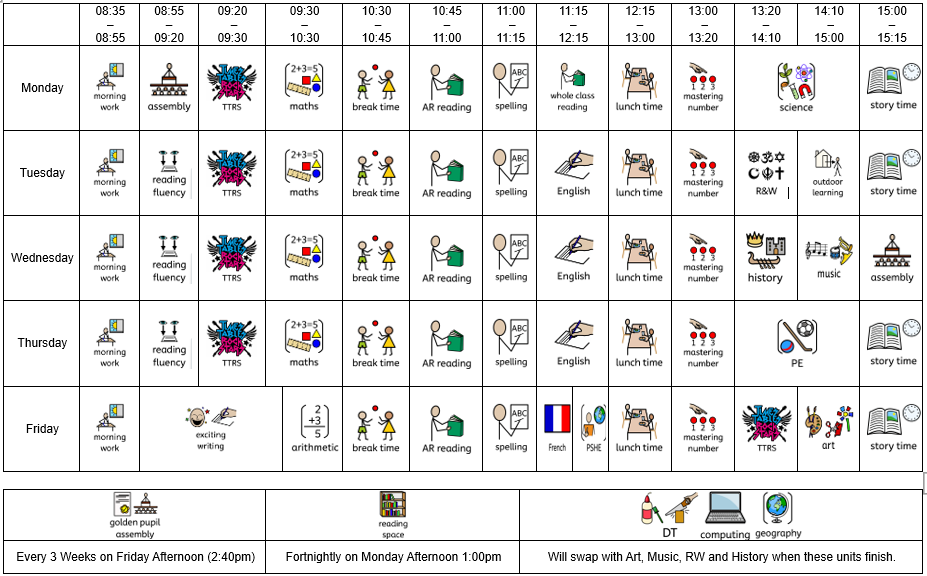
Expected Homework
- 45 Games of TTRS weekly. (Paper Copies are available for children who cannot access TTRS) This homework will be set weekly and due on Monday.
Optional Homework
- Spellings – Children can use different activities from the spelling menu to practice their spelling words. These are sent out termly on Class Dojo.
- Reading for Pleasure – Celebrate the love of reading at home by logging your minutes that you have read on Track My Read. Any book, any type. - Pupil sign in | Track My Read
- Writing Suggestions - https://sway.cloud.microsoft/HKYvNhVFUEz9b9li?ref=Link
A Guide to Accelerated Reader, Please click the link: A Parent's Guide to Accelerated Reader (AR). Please note, if they are on the band 4.0 or above, the children have to complete five reads at that point before they move up to 4.1 and so on.
Previous Academic Years
Tuesday 7th January 2025.
We’ve had a great start back at school today! The pupils were introduced toVarjak Paw, which will be the focus of our English lessons this term. In Maths, we explored the distributive law and applied it to our 12x tables. Pupils practiced breaking down multiplication into steps, such as finding 10 times a number and adding 2 times that number to reach the final answer.
Just a couple of reminders:
- Please ensure your child has a pair of wellies in school for outdoor learning sessions on Tuesday and Wednesday afternoons.
- Warbler class will continue with PE on Thursdays, usually outdoors, so please check that your child has the correct kit.
If you have any questions or concerns, feel free to speak to Mr. Ward or Mrs. Rush.
WC 7th October 2024
This week in Year 4, we have focused on rounding numbers to the nearest 10, 100, and 1,000, giving the pupils opportunities to apply this in real-life situations. In English, pupils have been writing narratives, concentrating on building tension within their sentences. This ties into our class book Oliver and the Seawigs, where Oliver is stuck in stinking seaweed and must find a way out. Pupils have also worked on enhancing their word choices. In Science, we explored different animals and their teeth, examining their diets and explaining how these relate to their canines, molars, and incisors. In History, we studied Ancient Egyptian hierarchy and how their society was structured. On Thursday, we focused on mental health and well-being. In the afternoon, the pupils participated in a range of activities including a Zoom session with Reece James, who spoke about resilience. This tied in nicely with our focus on being a Diamond Learner. Every pupil should have a Vancols slip for their photo which was given out Friday. Have a lovely weekend.
Tuesday 17th September 2024
Warbler class have had a great first few backs in school. We have dived into our history topic of the Stone Age and learned all about how humans developed over this time. In Science, we are looking at food and digestion and modelled how this system works using cereal, tights and orange juice! The children also made some truly impressive models of their teeth, labelling the different types of teeth and their functions. Well done Warblers - a great start to the year!
Year 4 Warbler class 2024 - 2025.
Thursday 27th April
In Maths, we have been finding equivalent fractions with different denominators. We have learnt how to convert improper fractions to mixed numbers to help our understanding. This week, we have moved onto learning about decimals and how they link with fractions. The children have discovered which fractions are equivalent to decimals and why, using the place value grids.
In English, we have recently begun our main text this term, Varjak Paw. In our English lessons, we have written a
diary based on Varjak’s experiences in his home, discussing the main events and incorporated various emotions that he felt within the text. Discussing with their partners, the children have use a range of sentence structures and included both subordination and a range of adverbials to make their writing interesting
Thursday 16th March
In English, the children have now finished the book Floodland and so we have focussed this week on poetry and using the book The Ink House, which the children used on World Book Day, to write a recipe for an incredible Mocktail to drink at the Annual Extravaganza. This has allowed the children to really explore and push their vocabulary to richly describe their work to make it sound as appealing and delicious as possible.
In Maths, we have continued to focus on fractions, looking at the relationship between parts and whole and really investigating what the denominator ad numerator represent within a fraction in different contexts. The children have used blocks, shapes and drawings to fully understand and describe these which gives them a firm base to explore fractions further in the coming weeks.
In Science we have continued to look at Living Things and their Habitats, focussing on categorising animals into different kingdoms using a dichotomous key and they were able to use this to make their own branching diagrams to identify different mini-beasts.
Well done to both classes for their excellent attitude to their assessments last week. Rehearsals for our performance are in full swing with the children really engaging with their parts and focussing on the acting.
Thursday 19th January
In English, Year 4 have started to work on the book Floodland which is set in a dystopian version of England where the sea has risen and flooded the country, leaving behind only a few habitable islands. The children have been working on their narrative writing, focussing on using adverbials to include additional information to enrich their work. Both classes have also concentrated on how to use dialogue effectively through accurate punctuation and how to convey character through effective word choice.
In Maths, Puffin and Warbler classes have been working on their strategies to solve the three, six- and nine-times tables. We then used these strategies to solve various word problems including how to approach more complicated sums including multiplying three numbers together.
In Science, the children have continued to investigate sound and how it travels by looking at how far the sound waves of different instruments travel and applying their understanding of sound as vibrations to explain what is happening.
In History, the Tudor period is our topic with the monarchs and the wives of Henry VIII as our current area of focus as we aim to understand the impact of the events surrounding these people and the impact it had on England.
Friday 9th December
This week in English, the children have had a History focus with the children writing an essay response to “How was Ancient Egypt similar or different to life today?”. The children presented the knowledge that they have gained this term which included discussing social hierarchy, their beliefs, mummification and the pyramids, linking back to the how each topic compared with life today. In Maths, both classes have now moved on to multiplication and division, focussing on the different ways that these operations can be expressed.
In Science, Warblers have explored how temperature changes states of matter through looking at melting and freezing as well as evaporation and condensation. They discussed how these processes were reversible and how heating and cooling were used to change the state of water. Practically, the children then explored how they could change the rate at which states of matter changed by using a range of scientific equipmen
Monday 14th November
In English, the children have been exploring how to use adverbials to add extra information to a sentence about how, where and when things happen. They then used this to improve a paragraph written about our book Oliver and the Seawigs. Moving on from this, both classes have been looking at newspaper reports and have rewritten a dramatic scene from our class book in this style.
In Maths, we have been looking at solidifying their understanding of the column method for addition and subtraction to ensure they can explain the different parts of the method and can choose the most efficient way to solve our questions. They have also continued to work on using efficient strategies to solve a range of times tables with additional focus on our arithmetic.
In Science we have started our new subject States of Matter and Puffins and Warblers have been considering the particle structure of solids, liquids and gases to see how these compare between the different states. These structures link to the properties of the different states and the children have demonstrated their understanding of this through drawing pictures and classifying items into the three groups
Thursday 3rd November
In English, we have continued our work on Oliver and the Seawigs and have written a letter to one of the characters to try to persuade him to continue his journey despite a challenging setback. The children thought about making their point, providing evidence for this reason using subordinating conjunctions, explaining it further with adverbials (such as therefore) and then adding further reasons using adverbials of addition (furthermore).
In Maths, we have been looking at adding three numbers together and explaining why we make certain decisions based on the facts that we know so that we can dd together more accurately and efficiently. This then leads on to picking the best strategy for different sorts of questions by applying their knowledge of complements to 100 and number bonds.
In Science, we finished our work on Electricity by recapping the dangers of electricity and how we can recognise and explain these dangers based on what we have learned – such as not putting a knife in a toaster as it is made from metal which is a conductor of electricity. We are moving on to learning about different states of matter – how to recognise, group and define different objects based on their properties.
In Computing, the children continued their computing learning by looking at loops in programs. The children created a piece of music, on scratch, using repetitive loops to keep the sound continuing. In Art, the children have started learning about the formal elements of art. This week, they have developed their mark making skills by creating marks to a feeling prompt. For example, a mark to show happiness, sadness, excited or confused. In DT, Year 3 and 4 will be constructing and evaluating the castles that they have been designing from a mixture of 3D paper shapes (made from nets) and recycled materials.
Thursday 20th October
This week, Year 4 attended a sports event at Winhills where they played dodgeball, football and netball, demonstrating excellent sportsmanship and team working. They have also continued to learn about Rock and Roll, singing and playing along on a glockenspiel to some classic rock and roll tracks. In English, we have continued to base our work around the book Oliver and the Seawigs and have been focussing on narrative writing with complex sentences. During Maths lessons, Addition and Subtraction is now the focus with children investigating different ways to represent their numbers using bar models and part-whole models. Our Electricity topic in Science has now come to an end and the children have been demonstrating their knowledge of this through constructing switches and explaining how these work. Both classes are also now in a position to begin the construction of their castles after half term as they have been building and decorating nets in preparation. Their castles will be a combination of 3D nets and recycled material so please do remember to send any boxes, tubes, roll etc in with your children after the half term. We hope you have a fantastic week off and look forward to the next half-term.
Thursday 13th October
In English, we have been focussing on identifying different clauses. Pupils have been using these to create simple, compound and complex sentences and have been able to identify these in their own work. We have written a narrative about our class book, Oliver and the Seawigs, recalling certain events and including the FANTASTIC feeling.
In Maths, we have focussed on comparing and ordering number in place value based on real life contexts such as calories in food and distances. This week, we have begun looking at Roman numerals, discussing where these could be found and the rules for using them correctly.
In Science, Year 4 have continued our work on electricity, focussing on conductors and insulators. They have learnt to make simple circuits to light a bulb and use this to investigate the properties of different insulators and conductors. Children will soon be using this knowledge to create their own switches, using different materials.
In Computing, the children have started coding with the application Scratch. They have experimented and tinkered with Scratch this week, learning how to move a sprite and how to use the blocks to make an algorithm.
In Art, the children have been continuing their learning about prehistoric art. They have scaled up their drawings and used charcoal to make patterns and shade. This week, they have applied their learning to making their sketch on a cave wall.
In DT, Year 3 and 4 have continued to plan their castles and have begun to practise and construct nets of three-dimensional shapes which they will use alongside recycled materials in their final product.